Gauntlet Part Two: High Standards, High Support
No Friction to Becoming AI Native
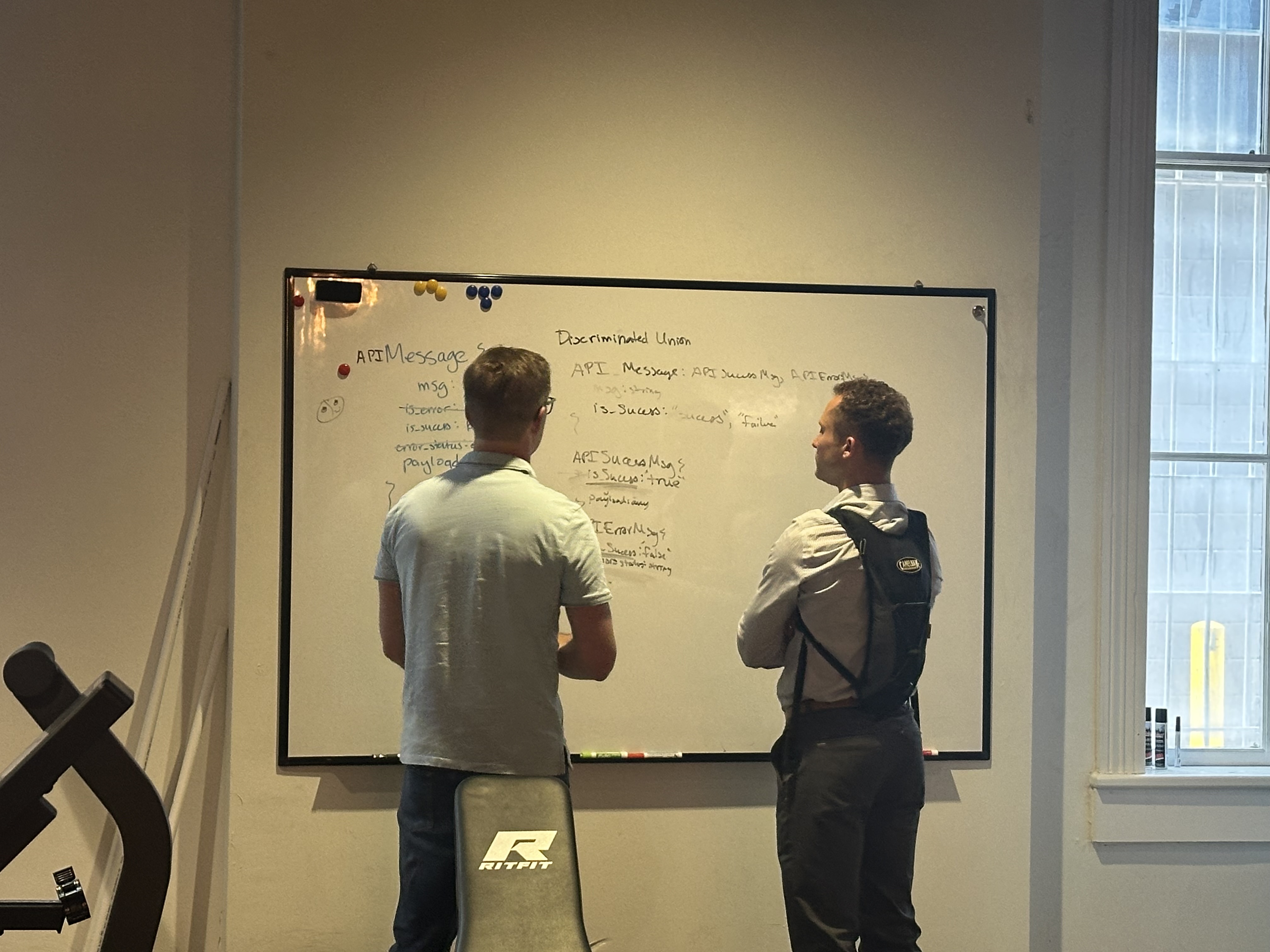
When was the last time you truly gave something your all? What was the last endeavor where all of your focus, all of your creativity, and all of your physical and mental presence was dedicated towards one goal? No room for excuses, and most importantly, both high standards and high support coming from your peers?
As I reflect on my first five weeks at Gauntlet, experiencing a blend of sleep deprivation but also intense adventure and meaning, one thing is clear: Austen Allred and the Gauntlet AI team have created an environment where there is literally no friction to becoming AI native, other than whatever limiting beliefs operate in the confines of your own mind.
Weeks 1-3
The first three weeks of Gauntlet, all virtual, came and went as a fever dream. This was the more learning-heavy part of the program and my brain had to reorganize itself from a sales focus into what Ash calls a "software factory" (becoming adept at working with the AI to create robust and scalable apps that delight).
I found myself busier than ever, learning about concepts ranging from RAG to harnesses to evals and tackling the challenging projects assigned to us. The format most days was meetings from 10am to 5pm, split between lectures from Gauntlet instructors and architecture defenses with our peers.
These first three weeks served as a way to weed out those who made it through the admissions process but later found out they just did not have the time or energy to commit to Gauntlet. In our very first meeting, there were around 90 attendees on the Google Meet. By the time we made it to week four, I'm pretty sure we were down to the mid-70s. This program is definitely not for the faint of heart, and I'm impressed by those who have families and other obligations to handle at the same time.
The projects we built during this time were, in my opinion, monstrous. Essentially, we had to audit an existing codebase from an open-source EMR (Electronic Medical Records) software, mostly written in the legacy language of PHP, and add in an AI chatbot that a physician could consult within the 90 seconds they had between patient visits. Furthermore, we created a red team of AI Agents to find vulnerabilities in our system and propose patches. I learned so much about evaluating trade-offs between speed, accuracy, and cost.
With anyone being able to "one-shot" applications with AI these days, the real skill is knowing how to articulate the architectural decisions that you made. In fact, the general consensus is 90% of your time should be spent on research and creating the specs, and only the final 10% should be spent on actual code.
Weeks 4-5
On Saturday, May 16, after completing a long bike ride and rope swinging into the river one final time, I headed over to an apartment downtown to begin the next phase of Gauntlet. This was, in retrospect, when the program actually started, because my environment completely flipped. When I say that Gauntlet removes all friction to becoming AI native, this is what I mean:
- →An apartment downtown completely paid for.
- →Three meals a day.
- →Free laundry.
- →Uber rides if it's raining.
- →A $450 Ramp card for AI tokens.
- →Plenty of Gauntlet staff at HQ to talk through ideas, sometimes until 11pm.
The orientation on Sunday morning really brought home a few core concepts.
Why Gauntlet is different from any other program out there:
- →Most programs are virtual. Gauntlet is in person.
- →Most programs are paid. Gauntlet is free.
- →Most programs promise a fixed curriculum laid out from the start. Gauntlet could flip the whole plan the next day (this happens).
And it's these three things that allow Gauntlet to help you achieve the ultimate goal of this program: because of your superior level of applied AI skills, get hired at an amazing company for a great salary. I don't know how the staff are compensated, but they clearly care a lot about us achieving this goal.
This leads me into the support team. While everyone on the Gauntlet team is a very impressive individual, whether it's Rebecca organizing our arrival logistics or Tom coordinating their marketing, the main faces that Challengers see are Jon and Jevic.
Technically in Advisor roles, they are the ones most directly involved in shaping us up to become the most hireable versions of ourselves. Take mock interviews: In week four, Jon and Jevic held individual mock interviews with each of us, grilled us intensely, and then provided immediate feedback. Although they're tough on us, especially when it comes to tardiness, the Challengers can definitely feel that this comes from a place of caring. One of them is always around, sometimes staying until 11pm to talk through any blocks that we're running into. The prep they've put us through has already come in handy with the interviews we had with the platinum hiring partners this week (I'll touch more on hiring partners in the next blog).
In these last five weeks, it feels like my mind has experienced a tectonic shift. Deep levels of agency and creativity that were previously latent are now coming online. I'm constantly thinking of ideas for new apps and solutions to age-old problems. Some side projects include:
- →A dance trainer app that provides instant feedback on your form.
- →An always-on Jarvis-style companion that allows me to navigate my computer simply with speech.
- →A focus trainer app that monitors my gaze to determine focus quality.
I'm writing this on the final day of week five, and I'm internally conflicted as to whether I'm sad or happy that we are halfway through the program. This has been one of the most challenging experiences of my life, but also one of the most rewarding. Excited for the coming weeks, which will feature much more action on the hiring partners' side!